Pricing & Planning
How Much Does Mobile LED Billboard Advertising Cost? (2026 Pricing Guide)
A transparent breakdown of mobile digital billboard pricing—with rates starting as low as $1,200 per day—plus cost factors and how to maximize your OOH advertising budget.
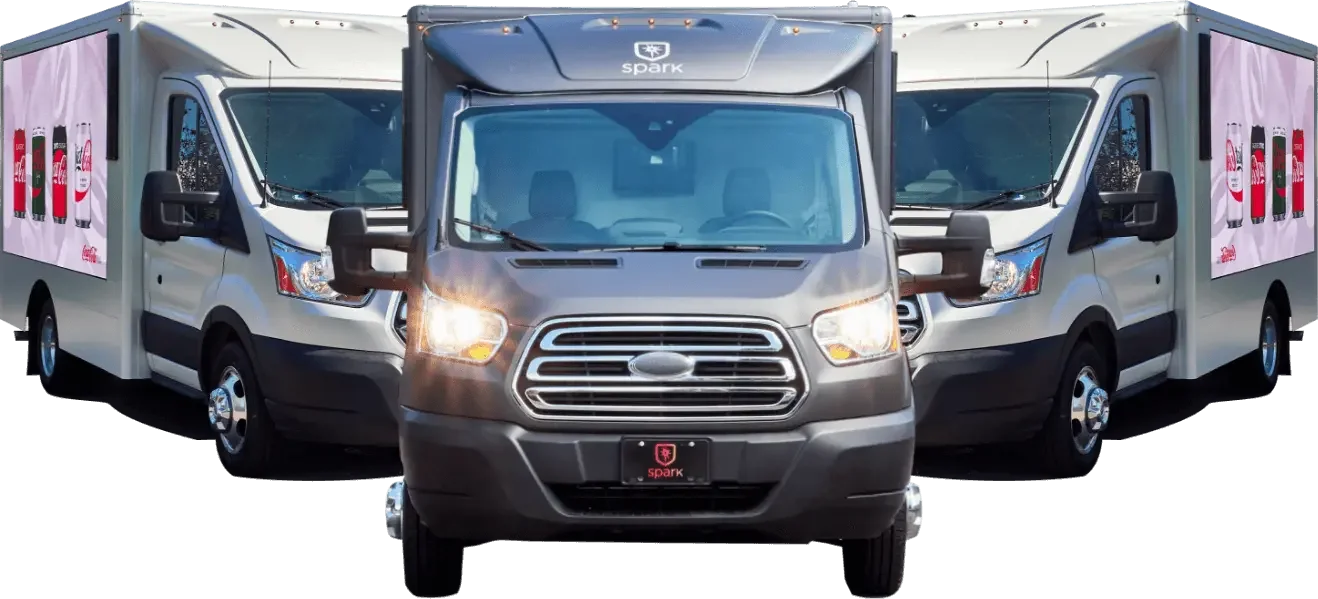
The most common question we hear is also the one with the most honest answer: it depends on your market, your schedule, and what the campaign needs to accomplish. What we can tell you up front is where pricing starts: our mobile LED billboard rates begin as low as $1,200 per day. This guide explains how mobile digital billboard pricing works, what moves the number up or down, and how to budget so every dollar is tied to a result you can measure. Request a quote for exact pricing on your campaign.
Key Takeaways
- Our mobile LED billboard rates start as low as $1,200 per day, with better value at weekly and monthly durations.
- Routes, operating hours, market size, and creative production drive the final price more than the truck itself.
- Compare quotes on cost per thousand impressions (CPM) and total campaign cost—not the daily rate alone.
Daily vs. Weekly Rates: How Campaigns Are Priced
Mobile LED billboard trucks are most often booked by the day, with a defined number of operating hours—commonly eight to ten—on a planned route. Our rates start as low as $1,200 per day, and the final figure depends on the market, the route, and the scope of work. Major metros with high demand and dense traffic typically sit above the starting rate; smaller markets and off-peak windows are where the lowest pricing is usually found.
Longer commitments almost always improve the economics. A multi-week or monthly campaign usually carries a lower effective daily rate than a single-day booking, because routing, staffing, and production costs are spread across more operating days. If your goal is sustained local presence rather than a one-day splash, ask for weekly and monthly pricing side by side—the difference is often significant.
What Actually Drives the Cost
Two quotes for the same city can differ widely because the truck is only part of what you are buying. Understanding the cost factors helps you compare proposals fairly and trim the right things when budget is tight.
- Route and geography: dense urban corridors, event zones, and high-traffic retail districts cost more to work than open suburban routes.
- Operating hours: an eight-hour day costs less than a twelve-hour day, and evening or weekend windows may be priced differently.
- Campaign duration: longer runs lower the effective daily rate and reduce per-day setup overhead.
- Creative production: static artwork is the baseline; motion graphics, video, and multiple creative versions add production cost.
- Number of trucks: a single truck builds local presence; a multi-truck convoy multiplies visibility—and the budget.
- Add-ons: GPS route reporting, campaign photography, and dedicated landing pages may be included or itemized depending on the provider.
Mobile LED Trucks vs. Static Billboards: The CPM Question
A useful way to compare outdoor formats is cost per thousand impressions (CPM). Industry analyses commonly place mobile billboard CPM in the low single digits—often cited in the roughly $1 to $5 range—because a truck moves through multiple high-traffic areas in a single day instead of waiting for traffic to pass one fixed sign. Static bulletin billboards in major markets can carry monthly rates in the thousands to tens of thousands of dollars, with CPMs that vary enormously by location quality.
Treat any CPM figure as an estimate, not a guarantee. Impressions for moving media are modeled from traffic and pedestrian data, and no outdoor format can verify that every passerby looked at the screen. The honest comparison is total campaign cost against the audience, geography, and flexibility you actually need: a static board buys one location for a month, while a truck buys routes, timing, and the ability to follow your audience.
How to Budget for Maximum Impact
Start with the outcome, not the truck count. A grand opening might need three concentrated days around the store; a brand awareness push might need four weeks of steady presence across a metro. Matching duration to the goal is the single biggest budgeting lever you control.
Concentrate before you spread. One truck running a tight, well-chosen route through your highest-value corridors usually outperforms the same budget stretched thin across an entire metro. Ask for route recommendations based on where your customers actually are, and request GPS verification so you can confirm delivery.
Finally, budget for measurement. A campaign-specific landing page, offer code, or dedicated phone number costs little compared with the media buy, and it turns an exposure estimate into a result you can evaluate. The best-priced campaign is the one you can prove worked.